How Pogclip picks clips
Finding the best five minutes in an hour of video usually means watching the whole hour again. You scrub back and forth, take notes, and try to remember where a good story actually started.
Pogclip does that reading and choosing for you. It’s new, so we don’t have customer logos or testimonials to show you yet. What we can show you is how it works and what it did on real videos.
Every clip is a suggestion. You can trim it, fix the captions, reframe it or skip it. Pogclip never posts anything for you.
It reads the whole transcript first
Upload an MP4 or paste a YouTube link, and Pogclip turns everything that’s said into a transcript, with a timestamp on every word. It reads all of it before choosing anything. Linus Torvalds’ best-known line comes 50 minutes into a 64-minute talk, and Pogclip still ranked it second. It works the same whether you paste a link or clip any video file from your computer.
It looks for moments that stand on their own and have a payoff: a sharp idea, useful advice, a story that lands, something funny or moving. In Brian Chesky’s Stanford talk, it kept the stretch where he stops describing a five-star stay and starts inventing a ten-star one. In Peter Thiel’s lecture, it kept his case for being the last company in a category, not the first.
How a clip is shaped
Pogclip keeps just enough setup for a stranger to follow, and stops as soon as the point is made, before the speaker drifts into the next topic. That matters most in podcast episodes, where a good answer often depends on a question asked minutes earlier. Every clip starts on the first word of a sentence and ends on the last. If Pogclip can’t pin down exactly where a moment starts or ends, it leaves that moment out rather than guess.
On Auto, length follows the moment. If you need a specific window, pick under 30 seconds, 30 to 60 or 60 to 90 before you start.
You’ll get anywhere from zero to twelve clips, depending on what the video holds, not how long it runs. Pogclip never pads the list, and a video with nothing worth keeping costs nothing.
What the scores mean
A score is not a promise of views. It tells you which clip to watch first. Each clip gets an overall score out of 100, plus three ratings, each with a one-line reason. The overall score is a judgment of the whole clip, not a sum of the parts; the ratings show where it’s strong or weak.
- Hook
- Does the clip’s actual first line make you want to keep watching?
- Flow
- Can someone who never saw the rest of the video follow it from start to end?
- Value
- Do you walk away with something specific: an idea, a lesson, a story’s payoff, a laugh?
- 90+Exceptional
- 70–89Strong
- 40–69Needs work
- Under 40Weak
Each clip also flags what to fix before you post it, such as a missing setup or an ending that stops too soon.
Because Pogclip only returns moments it thinks are worth posting, scores run high. Across the 39 clips in the test below, the lowest was 75, the middle was 85, and 18 scored 90 or more. Moments in the bottom two bands usually don’t make the list at all. Use scores to compare clips from the same video, not to grade the video.
Eight videos, 41 moments, 39 clips
Every example on our site came straight out of Pogclip, run on public, licensed videos on the Auto setting. Here’s what came back. Each title opens the original video where its top clip starts.
A 77-minute podcast with Satya Nadella gave three clips; a 50-minute lecture by Peter Thiel gave twelve. Across the eight videos, Pogclip found 41 moments worth posting and turned 39 of them into clips. The other 2 moments were left out because their exact start or end couldn’t be pinned down, even though one had scored 95.
 SCORE98
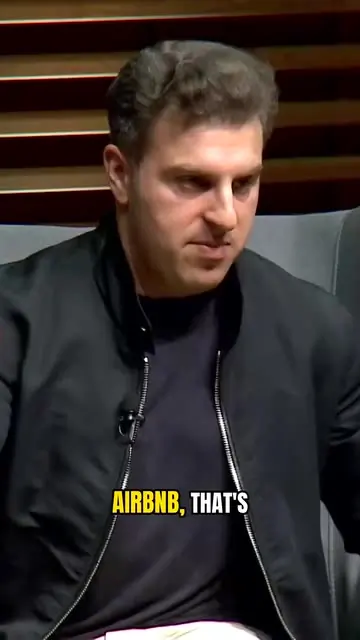
The top clip from Brian Chesky’s 55-minute Stanford talk, where he imagines Airbnb stays from five stars up to ten.
The famous lines test
A few of these videos are known for one line. We didn’t tell Pogclip what to look for, then checked where each line ended up.
If you want to change the world, start off by making your bed.
Admiral William H. McRaven, University of Texas at Austin Commencement 2014 · #1 in this video, score 95People don’t buy what you do, they buy why you do it.
Simon Sinek, How Great Leaders Inspire Action, TED · #1 in this video, score 95A ten-star experience: you show up and Elon Musk says, we’re going to space.
Brian Chesky, Designing a 10-star Experience, Stanford Graduate School of Business · #1 in this video, score 98You want to be the last company in a category.
Peter Thiel, Competition is for Losers, Lecture 5 · #1 in this video, score 95
Checking titles against what was said
Before any of these clips went on our site, we rewrote one title and eight descriptions by hand. AI writes confident titles, and some of them were wrong. In an early run, Pogclip titled the Chesky clip “The 11-Star Experience”. His list stops at ten; the tool had borrowed a detail from outside the clip. Another early title mentioned “1.5 billion stays” when the clip only talked about 1% and 99%.
So now every title and description is checked against what was actually said. If it includes a number or a name that isn’t in the clip or the video’s own title, Pogclip rewrites it from the clip’s own words, and if that still fails, flags the clip for you to review.
Where Pogclip falls short
We’d rather you know the limits before you upload.
- It chooses by the words. When it picks moments, Pogclip goes by what is said and doesn’t hear tone of voice. It looks at faces only to keep the speaker in frame, not to judge what happens on screen. That’s why it shines on talks, interviews, podcasts and lessons, and why a moment that lives in the picture, like a great play in a game or a look on someone’s face, can slip past it. Gameplay streams are what our founder, Alex Zheng, wants it to handle next.
- Six languages, for now. It works with spoken English, Spanish, Portuguese, French, German and Italian.
- Speakers can get mixed up in the notes. In a conversation, the one-line reason under a score can occasionally credit the wrong person.